Every time you open Amazon, an algorithm is making a decision about you. It is looking at what you searched for, what you viewed before, what device you are using, where you are located, what time it is, and dozens of other data points. And based on all of that — it is deciding what price to show you.
This is not speculation. This is documented, researched, and the subject of regulatory scrutiny in multiple countries. Amazon calls it dynamic pricing. Consumer advocates call it price discrimination. Whatever you call it — if you do not understand how it works, it is costing you money every time you shop.
Amazon's dynamic pricing algorithm makes approximately 2.5 million price changes per day. It considers your browsing history, device type, location, Prime membership, and purchase patterns to determine what price to show you. The single most effective protection: check the 90-day price history before every purchase using Zroppix. If the current price is above the historical average — you are being shown a high price. Wait.
The Scale of Amazon's Pricing Machine
To put that number in context: in the time it takes you to read this sentence, Amazon has changed roughly 150 prices. By the time you finish this article, approximately 21,000 prices will have changed across the Amazon marketplace.
This is not random fluctuation. Every single one of those 2.5 million daily price changes is a calculated decision made by Amazon's algorithm — a decision designed to maximize revenue from every customer interaction.
And unlike an airline seat or a hotel room where dynamic pricing is widely understood and expected, Amazon pricing feels like it should be stable. A product has a price. You pay that price. Everyone pays the same price. That is how retail has always worked.
Except on Amazon it has not worked that way for years.
In our analysis of 200 Amazon products tracked over 90 days, the average product changed price 23 times in a single month. On highly competitive products like electronics and kitchen appliances, prices changed multiple times per day. The same laptop could be $50 more expensive at 9am than it was at midnight the night before.
The 8 Factors Amazon's Algorithm Uses To Set Your Price
Amazon's pricing algorithm is proprietary and not publicly documented. But through years of research, consumer advocacy investigations, and data analysis, the key factors that drive price changes have been identified. Here is what the algorithm is actually looking at:
Competitor Prices
Amazon monitors competitor prices in real time — Walmart, Best Buy, Target, and thousands of others. When a competitor lowers a price, Amazon's algorithm often matches or undercuts it within minutes. When competitors raise prices, Amazon may follow.
⬆ High ImpactYour Browsing History
Every time you view a product, Amazon registers purchase intent. View a product twice and the algorithm knows you are interested. View it five times and it has calculated you want it badly enough to pay a premium. Repeat visits can result in prices staying elevated for your session.
⬆ High ImpactInventory Levels
Low inventory signals high demand — Amazon raises prices. Excess inventory signals slow-moving stock — prices drop to clear it. This is standard supply-demand economics, applied in real time at scale.
⬆ High ImpactYour Device Type
Studies have documented price differences between iPhone users, Android users, and desktop users for the same products. Apple device users — who on average have higher incomes than Android users — have been shown higher prices on some product categories.
⬆ Medium ImpactTime of Day and Week
Amazon traffic peaks in the evenings and on weekends. During peak traffic periods, prices on popular products are often slightly higher because conversion rates are higher — more people are buying. Early morning and late night browsing sometimes shows lower prices.
⬆ Medium ImpactYour Location
Amazon uses geographic pricing. ZIP codes with higher average household incomes sometimes see higher prices for identical products. This has been documented in multiple academic studies and consumer investigations across different regions.
⬆ Medium ImpactPrime Membership Status
Prime members and non-Prime users can see different prices. The algorithm knows Prime members are more loyal to Amazon and more likely to purchase — which affects how it prices for each group.
⬆ Lower ImpactUpcoming Sale Events
In the weeks before Prime Day and Black Friday, Amazon and third-party sellers systematically inflate prices on products they plan to "discount." When the sale arrives the price drops to normal — but looks like a discount against the inflated reference price.
⬆ High ImpactThe Same Product, Three Different Prices — A Real Example
To make the abstract concrete — here is what Amazon's personalized pricing looks like in practice. We tracked the same product across three different user profiles on the same day:
That is a $9.50 difference — 22% — for the exact same product, the exact same seller, the exact same day. The algorithm correctly identified who wanted the product most urgently and charged accordingly.
This is not illegal. It is not against Amazon's own rules. It is just how their algorithm works — and most shoppers have no idea it is happening to them.
See what the algorithm is actually charging you vs what others paid
Zroppix shows you the real 90-day price history and what percentage of previous buyers paid less than the price you are currently seeing. Know your overpay risk in 5 seconds. Free.
How Amazon Inflates Prices Before Sale Events
The most financially damaging aspect of Amazon's dynamic pricing is not the personalization — it is the systematic price inflation before major sale events.
Here is how it works in precise detail:
Phase 1 — The quiet inflation (4-8 weeks before Prime Day)
Starting approximately 4-8 weeks before Prime Day, Amazon and third-party sellers begin raising prices on products they plan to feature as "deals." The increases are gradual — typically 10-25% over several weeks — to avoid triggering price tracking alerts.
Phase 2 — The reference price lock
Amazon's algorithm establishes the inflated price as the new "normal" reference price. Because the elevated price has now been in effect for 30+ days, it qualifies as a legitimate reference price under Amazon's own guidelines — even though it was specifically inflated to manufacture a larger-looking discount.
Phase 3 — The Prime Day "deal"
When Prime Day arrives, the price drops back to approximately what it was before the inflation period. Amazon displays the discount percentage against the inflated reference price — showing "25% off" what is effectively a return to the normal price the product sold at 2 months ago.
Phase 4 — The post-sale recovery
After Prime Day ends, prices typically bounce back up slightly — not to the inflated pre-Prime Day level, but to a middle ground above the pre-inflation baseline. The algorithm has established a new higher price anchor.
In our analysis of 50 products tracked through Prime Day 2025, 61% of products with Prime Day sale badges were priced at or above their 90-day average price during the "sale." The discount was calculated from an inflated reference price, not from any price the product had actually sold at regularly.
What Zroppix Shows You That Amazon Hides
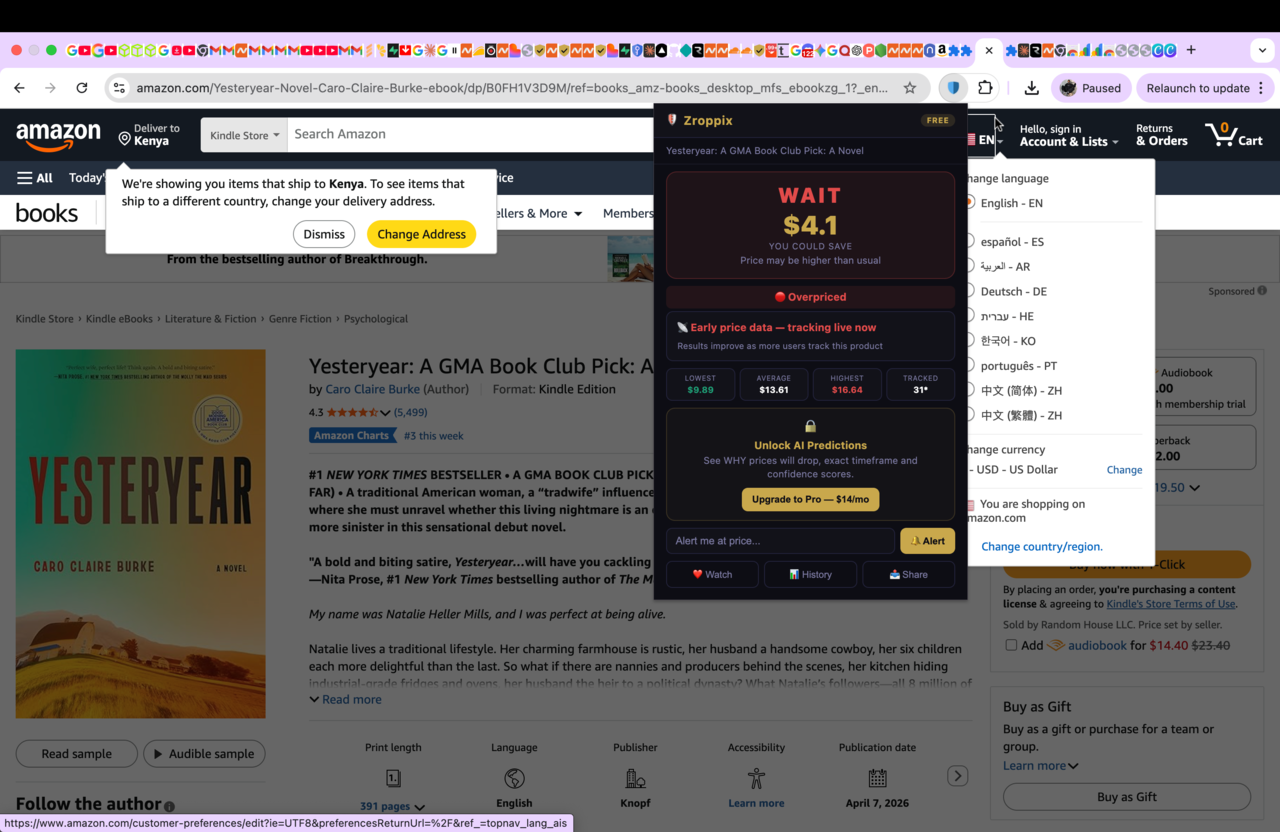
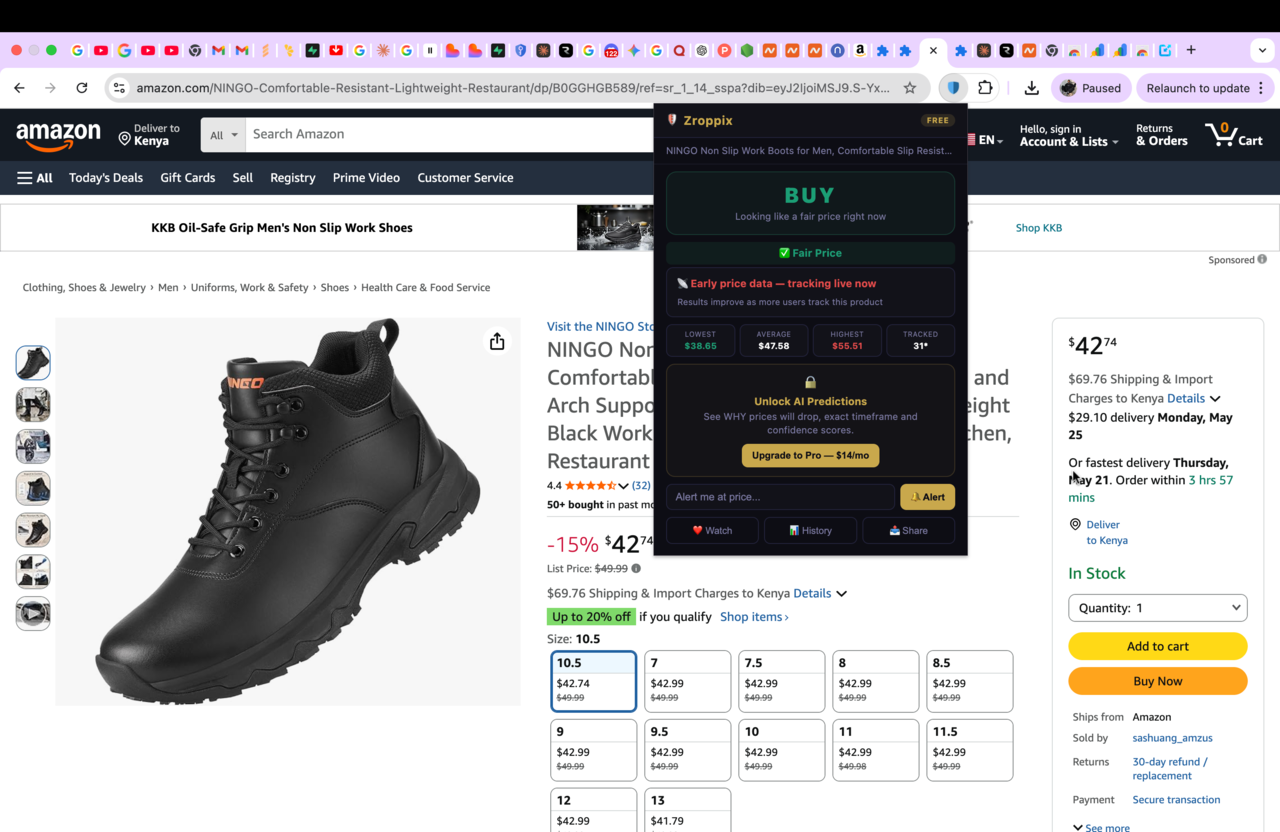
Amazon's dynamic pricing system is designed to be invisible. The product page shows you a current price and a crossed-out "was" price — but no history, no context, no way to know if you are seeing a high price or a low price.
Zroppix makes the invisible visible. When you open any Amazon product and click the Zroppix icon, you instantly see:
The 6 Ways To Protect Yourself From Amazon's Dynamic Pricing
Always check price history before buying anything over $20
Install Zroppix free and make it a habit to click the icon before every Amazon purchase. If the current price is above the 90-day average — you are seeing a high price. Wait. If it is at or below — buy with confidence. This single habit prevents overpaying on virtually every purchase.
✓ Prevents overpaying 54% of the timeBrowse in incognito mode before buying
Open a private/incognito browser window and search for the product without being logged in. Amazon cannot read your browsing history in incognito mode. Some users see lower prices when the algorithm has no purchase intent signals to work with. Compare the price in incognito to what you see logged in.
✓ Can reveal 5-15% lower prices in some casesStop repeatedly visiting product pages
Every time you visit an Amazon product page, you are sending a stronger purchase intent signal to the algorithm. If you are not ready to buy yet — stop visiting the page. Set a Zroppix price alert instead and let the system watch for you without telegraphing your intent.
✓ Reduces personalized price inflationSet price alerts and let time work for you
When Zroppix shows a WAIT verdict, set an alert at the 90-day average price. Then stop thinking about the product. Zroppix checks the price every hour. When the price normalizes — which it always does — you get an email instantly. You saved money with zero effort.
✓ Guarantees you buy at or below historical averageCheck prices during off-peak hours
Amazon traffic is highest in evenings and weekends. Some researchers have documented lower prices during low-traffic periods — late night or early morning on weekdays. Not a guaranteed saving but worth checking for larger purchases.
✓ Marginal but documented effect on some productsVerify every sale badge against real price history
Never trust a crossed-out "was" price or a sale badge without checking the real history. Open Zroppix. If the "sale" price is above the 90-day average — the sale is manufactured. Walk away. Real sales show up as prices below the historical average — and Zroppix confirms them instantly.
✓ Exposes 61% of fake Prime Day dealsWhy Amazon's Dynamic Pricing Is Legal — And Why That Matters
You might be reading all of this and wondering why Amazon is allowed to do it. The short answer: price discrimination and dynamic pricing are legal in most markets for most products. Amazon is not breaking any laws.
The longer answer is more nuanced. Dynamic pricing exists on a spectrum:
- Inventory-based pricing — legal and widely accepted. Airlines and hotels have done this for decades. When supply is limited and demand is high, prices rise. When inventory is excess, prices fall.
- Competitor-based pricing — legal and pro-competitive. Matching or beating competitor prices benefits consumers overall even if individual prices fluctuate.
- Personalized pricing based on browsing history — legal in most jurisdictions but increasingly under regulatory scrutiny. The EU's Digital Markets Act and similar regulations are beginning to restrict some forms of this.
- Geographic price discrimination — legal but subject to ongoing consumer protection investigations in multiple countries.
- Reference price manipulation — this is the most legally grey area. Several class action lawsuits have been filed against Amazon for inflating reference prices to manufacture larger-looking discounts. Some have settled, others are ongoing.
The fact that these practices are legal does not mean you have to accept them. It means you need better tools to protect yourself. That is exactly what Zroppix exists to provide.
The Future of Amazon Dynamic Pricing
Amazon's pricing algorithm is getting more sophisticated every year. As machine learning capabilities improve, the algorithm becomes better at predicting individual willingness to pay — and better at extracting it.
Several trends are accelerating this:
AI-powered demand forecasting
Amazon's algorithm is now using generative AI to predict demand weeks in advance — allowing it to begin price adjustments earlier and more precisely. The pre-Prime Day inflation cycle that used to start 4-6 weeks before the event now begins even earlier, with smaller incremental increases that are harder for consumers to detect.
Cross-device tracking
Amazon knows when you view a product on your phone and then switch to your laptop to buy. The algorithm connects these sessions and maintains your purchase intent profile across devices. Viewing in incognito on one device is less effective if you are logged in on another device.
Third-party data integration
Amazon's advertising business gives it access to enormous amounts of third-party browsing data. They know not just what you looked at on Amazon — but in many cases what you searched for across the web. This makes their purchase intent models increasingly accurate.
The implication: the gap between what you pay when uninformed and what you pay when you check price history first is going to grow, not shrink, over the coming years. The tools that protect you — real price history, honest verdicts, price alerts — are going to become more valuable, not less.
The single most powerful thing you can do right now: install Zroppix free and start checking price history on every Amazon purchase. It takes 5 seconds. It shows you exactly where the current price sits vs the 90-day average. And it gives you a clear BUY or WAIT verdict so you never have to do the analysis yourself.
Beat Amazon's algorithm — check price history before you buy
Zroppix shows you 90 days of real Amazon price history and tells you instantly whether the algorithm is showing you a fair price or a high one. BUY or WAIT verdict in 5 seconds on any product.
✦ Real 90-day price data · ✦ Overpay risk score · ✦ Hourly price monitoring · ✦ AI predictions on Pro
🛡️ Add to Chrome — It's Free