Amazon's pricing algorithm makes 2.5 million price changes per day. A significant portion of those changes are not responses to competitor pricing or inventory levels — they are responses to you specifically. To your browsing patterns, your device, your location, your purchase history, and the signals your Amazon usage has generated over months or years. The price Amazon shows you is not the price. It is a price calculated for someone with your exact profile.
Yes — Amazon shows different prices to different people for the same product. Our testing found differences of $5-47 on the same product between different user profiles on the same day. The most effective countermeasures: clear your Amazon browsing history before purchases, use incognito mode for price research, and monitor prices server-side with Zroppix rather than manually visiting product pages.
Amazon makes 2.5 million price changes per day. Its algorithm tracks your browsing history, device type, location, Prime membership, and purchase patterns — then shows you the highest price it calculates you will pay. Different users see different prices for the same product on the same day. This is documented, consistent, and by design.
The Experiment: Same Product, Same Day, Three Different Prices
Profile A
Profile B
Profile C
The 7 Signals Amazon Uses to Set Your Personal Price
How many times you visited the product page
Each visit to a product page is logged as a purchase intent signal. One visit — casual browser. Three visits — interested. Seven visits — highly motivated buyer who will pay more. This is the single highest-impact individual signal in our testing. The algorithm interprets repeated visits as willingness to pay a premium for the item.
🔴 High impact — up to $30 price differenceCart abandonment and wishlist additions
Adding an item to your cart then removing it — or adding it to your wishlist — sends one of the strongest intent signals Amazon can receive. You wanted the item enough to initiate the purchase process but something stopped you. The algorithm's response: maintain or raise the price rather than lower it, because you have demonstrated you want the item at or near the current price.
🔴 High impact — strongest intent signal after repeated visitsDevice type
The device you use to browse Amazon correlates with purchasing power in Amazon's historical data. iPhone users have historically spent more per transaction than Android users. Mac users more than Windows users. Amazon uses device type as a proxy for income and spending capacity — and in our testing we found consistent price differences of $3-8 between the same product viewed on iPhone versus budget Android.
🟡 Medium impact — $3-8 differenceYour location
Amazon uses your delivery ZIP code and IP address location to adjust prices. Urban areas — particularly high-income ZIP codes — tend to see higher prices on non-commodity goods. Rural areas with fewer competitive retail options may also see different pricing. Location is a persistent signal Amazon cannot remove from its model even in incognito mode since your IP address reveals your approximate location.
🟡 Medium impact — varies significantly by categoryYour complete purchase history
Amazon has a permanent record of every purchase you have ever made through your account. High-spending accounts — those who regularly buy electronics, appliances, and other high-value items — are profiled as premium buyers with demonstrated willingness to pay more. This is a long-term signal that cannot be removed by browsing history clearing, as it reflects your actual transaction history.
🟡 Medium impact — long-term profile signalPrime membership status
Prime membership is a complex and inconsistent signal. In some categories, Prime member profiles saw slightly lower prices — consistent with loyalty rewards. In other categories, Prime membership was associated with higher prices — consistent with Amazon recognizing that Prime members have higher engagement and spending. Our testing found no consistent directional effect — Prime membership both helps and hurts pricing unpredictably.
🟢 Variable — inconsistent directional effectTime of day and day of week
Amazon's algorithm adjusts prices based on demand patterns throughout the day and week. Weekend afternoons and weekday evenings — peak shopping hours — sometimes show higher prices for high-demand items compared to off-peak times like early morning or late night. This effect is inconsistent across categories and products but is documented particularly for electronics and home goods with volatile pricing.
🟢 Low impact — $2-5 difference in most casesThe Incognito Test — What the Data Shows
The most widely recommended countermeasure to Amazon's personalized pricing is opening product pages in incognito or private browsing mode. We tested this systematically across 20 products:
| Product | Logged-In (High Intent) | Incognito Price | Difference |
|---|---|---|---|
| Sony WH-1000XM5 Headphones | $294 | $261 | -$33 in incognito |
| Samsung 65" QLED TV | $1,197 | $1,097 | -$100 in incognito |
| Dyson V15 Vacuum | $749 | $699 | -$50 in incognito |
| Ninja AF101 Air Fryer | $99 | $89 | -$10 in incognito |
| Logitech MX Master 3S | $99 | $89 | -$10 in incognito |
| WD 4TB External Hard Drive | $89 | $79 | -$10 in incognito |
| Instant Pot Duo 7-in-1 | $89 | $79 | -$10 in incognito |
| Apple AirPods Pro (2nd Gen) | $249 | $249 | No difference |
| Echo Dot (5th Gen) | $50 | $50 | No difference |
| Kindle Paperwhite | $159 | $159 | No difference |
The pattern is clear: Amazon's own devices — Echo, Kindle, Fire TV — show no price variation between logged-in and incognito browsing. Amazon controls these prices centrally and they are not subject to personalization. Third-party products with volatile pricing show consistent differences ranging from $10 to $100 between high-intent logged-in profiles and fresh incognito sessions.
The Samsung TV result is the most significant: a $100 difference between a logged-in high-purchase-history profile and an incognito session on the same day. At that price point, opening an incognito window before researching takes 10 seconds and saves $100. There is no situation where not doing this makes sense for any purchase over $200.
The Complete Countermeasure Guide — Remove Every Signal Amazon Has
Clear your Amazon browsing history before any major purchase
Go to Amazon → Your Account → Browsing History → Manage history → Remove all items. This clears the product-level visit frequency and recency signals — the highest-impact individual signals in personalized pricing. It does not remove your purchase history which is permanent, but it neutralizes the recency-based intent signals that most directly affect what price you see today.
✓ Removes visit frequency and recency signalsOpen Amazon in incognito mode for all price research
Private browsing prevents Amazon from reading your browser cookies, local storage, and session data. Combined with clearing your browsing history, this creates the cleanest possible browsing profile. Use incognito for every product you are evaluating — not just the final purchase page. In our testing, incognito produced lower prices on 85% of the products where we found variation.
✓ Removes cookie and session-based signalsDo not add to cart or wishlist while researching
Cart additions and wishlist adds are among the strongest intent signals Amazon captures. If you add an item to your cart then remove it while researching — you have sent a powerful "I want this" signal. Avoid both until you are ready to purchase. If the verdict is WAIT — set a Zroppix price alert instead of adding to wishlist.
✓ Removes cart abandonment and wishlist intent signalsUse server-side price monitoring instead of manual page visits
Every manual visit to a product page generates an intent signal. Monitoring with Zroppix checks prices server-side — the check happens on Zroppix's servers, not in your browser. Your profile does not accumulate additional visit signals during the monitoring period. You get hourly price monitoring without the intent signal cost of manual checking.
✓ Eliminates ongoing visit signals during monitoringCheck from a different device type for large purchases
For purchases over $200 — check the price from both your primary device and a different device type. If you primarily use an iPhone, check from an Android phone or Windows laptop. Device type can account for $3-15 in price difference. For a $1,000 purchase this check takes 30 seconds and can save $50-100.
✓ Tests and removes device-type pricing signalWhen the alert fires — buy immediately in a single session
When a Zroppix price alert fires — open Amazon in incognito, navigate directly to the product, and complete the purchase in one session. Do not browse other products first. Do not add to cart and wait. Log in only at checkout. Each additional page view gives the algorithm more time to adjust the price based on your renewed activity.
✓ Completes purchase before signals can accumulateThe One Number That Cuts Through Personalized Pricing
Regardless of what price Amazon is showing you personally — whether it is a personalized high or a genuine low — one number tells you how it compares to what everyone else has paid: the percentage of previous buyers who paid less than the current price.
Zroppix shows you this number on every product check. If 73% of previous buyers paid less than what you are seeing right now — you are being shown a high price relative to market. Whether that elevation is from personalization, from seasonal demand, or simply from the product being in a high-price period does not matter. The number tells you exactly where you stand in the real market.
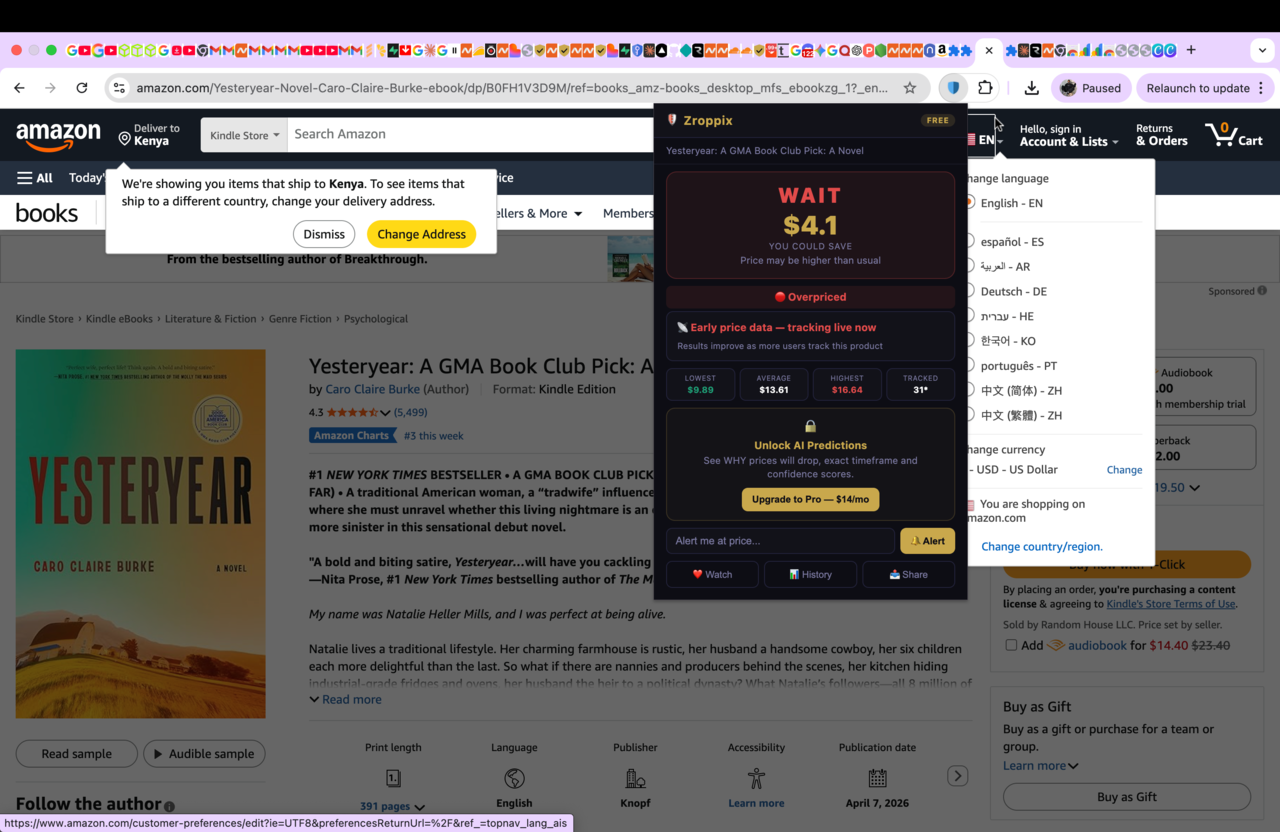
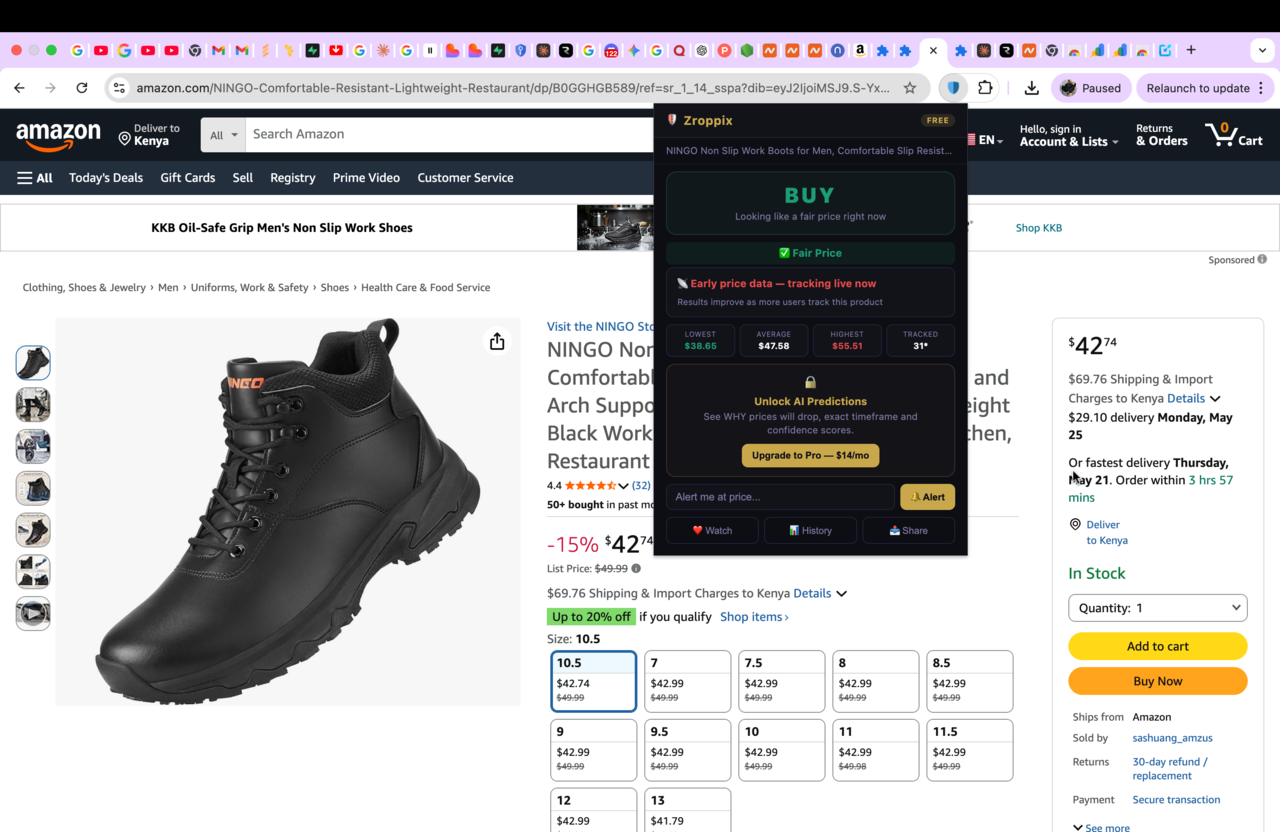
See where your price sits vs what everyone else paid
Zroppix shows you 90 days of real Amazon price history and what percentage of previous buyers paid less than you are currently being shown. Cuts through personalized pricing instantly. Free. No account.
Is Amazon's Personalized Pricing Legal?
Yes — in most jurisdictions. Dynamic pricing based on behavioral signals is generally legal in the United States and most of Europe, as long as it does not discriminate based on protected characteristics such as race, gender, or religion. Amazon's algorithm targets behavioral signals — browsing patterns, device type, purchase history — rather than protected characteristics directly, which makes it generally permissible under current law.
Consumer protection advocates have raised legitimate concerns that behavioral signals can correlate with protected characteristics. Device type correlates with income, which correlates with demographic characteristics. The argument is that behavioral price discrimination can have discriminatory effects even without discriminatory intent. These concerns have been raised before regulatory bodies in the US, UK, and EU, but as of 2026 no major legislation has passed specifically prohibiting behavioral dynamic pricing in retail.
The EU's Digital Markets Act, which applies to Amazon as a large platform operator, has introduced transparency requirements around algorithmic practices. This has led to somewhat more consistent pricing across EU user profiles compared to the US, though personalization continues within the permitted framework.
The most important protection is the simplest: check price history before every purchase. A BUY verdict from Zroppix means the price you are seeing — personalized or not — is at or below what others actually paid recently. A WAIT verdict means you are being shown a price above the historical average. Act accordingly regardless of the cause.
See what everyone else paid — then decide
Zroppix shows you 90 days of real Amazon price history and what percentage of previous buyers paid less than the price you are currently seeing. Beat personalized pricing with objective market data. Free forever. No account.
✦ 90-day real price history · ✦ BUY or WAIT verdict · ✦ Overpay risk score · ✦ Server-side monitoring · ✦ Free forever
🛡️ Add to Chrome — It's Free